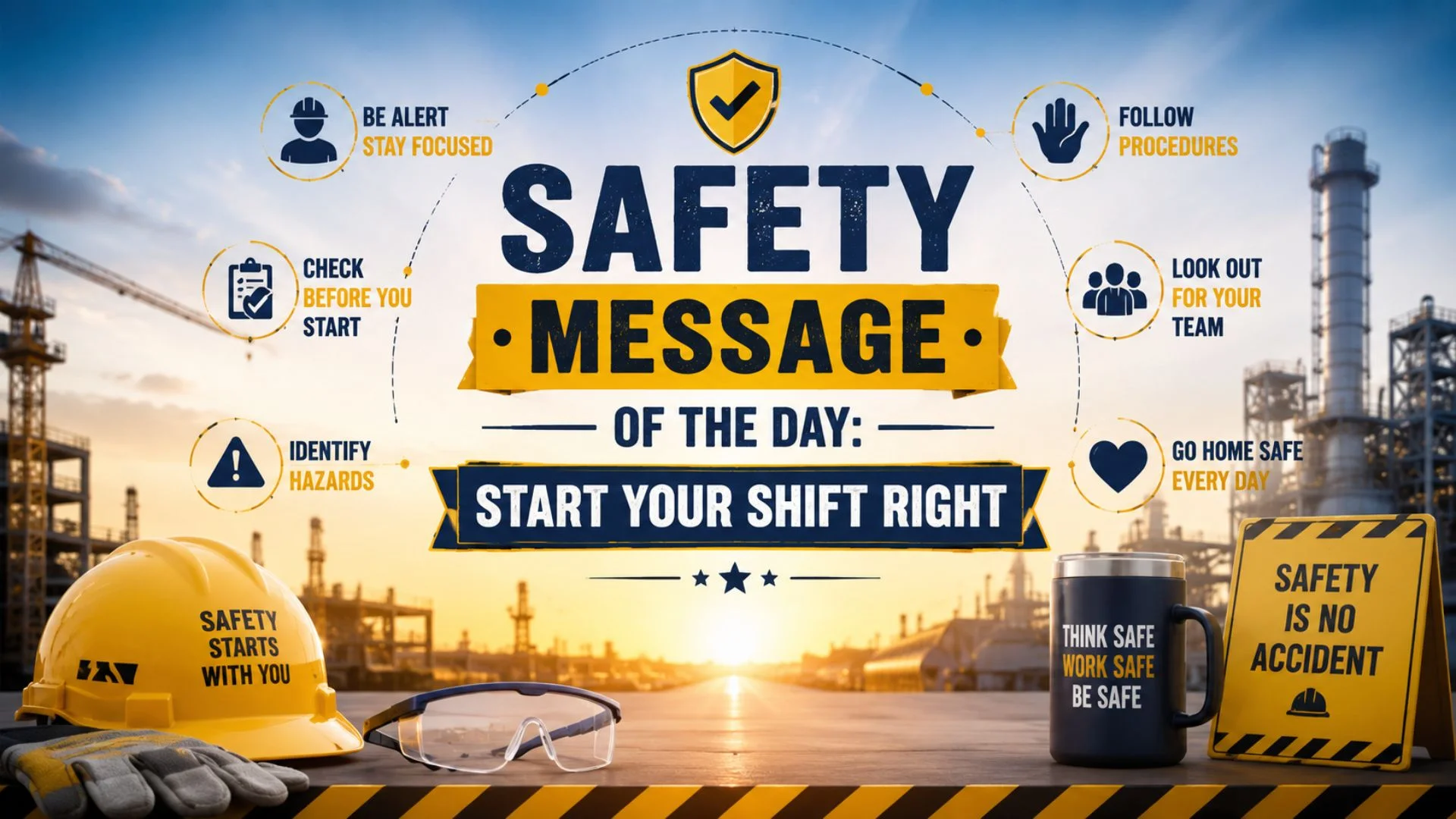
Every workplace needs a fresh safety message of the day to keep hazards top of mind. Starting each shift with a quick reminder helps workers stay alert and focused. A good safety message of the day can prevent accidents before they happen. Whether you work in construction, manufacturing, or an office, daily safety talks save lives. Safety is not just a policy. It is a habit that requires constant reinforcement. Reading one short safety message of the day each morning builds that habit over time.
The best safety message of the day is short, memorable, and actionable. Workers should be able to recall it hours later when they face a risky situation. Safety messages work because they interrupt autopilot mode. When people do the same task repeatedly, they stop noticing dangers. A daily safety message of the day breaks that trance. It forces everyone to pause and think before acting. Many companies have reduced injury rates by over fifty percent simply by starting each day with a focused safety reminder.
What Makes an Effective Daily Safety Reminder
An effective daily safety reminder is specific, positive, and relevant to the actual work being done. Avoid vague statements like be careful. Instead say check your ladder for damage before climbing. The best safety reminders focus on one single action or hazard. Workers can only remember one or two key points from each safety message. Keep your message under fifteen seconds when reading aloud. Use simple words that everyone understands, regardless of education level. A good safety message of the day also includes a why statement. Explain what could go wrong and what injury could happen. This creates emotional impact that pure commands cannot achieve.
Stay Aware of Your Surroundings
The most common workplace accidents happen because someone lost focus for just a moment. Distractions are everywhere from phone notifications to stressful thoughts. Train your eyes to scan your work area every few minutes. Look for moving equipment, uneven floors, or people walking nearby. Your ears are also safety tools so wear proper hearing protection without blocking all sound. A quick head turn before stepping backward can prevent a life changing collision.
- HeadsUpHero
- ScanAndSee
- LookBeforeLeap
- EyesOnTask
- SituationSage
- AwarenessAce
- DistractionDetective
- FocusFirefighter
- ZoneWatcher
- PeripheralPro
- SpatialSavvy
- RiskRover
- HazardSpotter
- GroundGazer
- CeilingChecker
- CornerCop
- BlindSpotBuster
- WalkwayWatcher
- FloorScout
- ToolTracker
- NoiseNinja
- AlertAmigo
- VigilanceVet
- WatchdogWorker
- ObservationOfficer
- CarefulCrew
- MindfulMover
- PresentPilot
- AttentiveAce
- RadarRanger
- VisionViking
- ScanSquad
- AwarenessAngel
- LookoutLeader
- SenseiOfSight
- SafetySpotter
- DangerDetector
- ThreatTracker
- GuardianGaze
- OpticOverseer
Use Your Personal Protective Equipment Correctly
Having safety gear is not enough you must wear it properly every single time. Hard hats lose protection if the suspension is loose or cracked. Safety glasses stop nothing if they sit on top of your hard hat. Gloves must fit snugly without loose fabric that could catch in machines. Earplugs need full insertion to achieve the correct noise reduction rating. Check your boots for worn soles that destroy slip resistance. Replace any damaged equipment immediately do not wait until next week. Your family wants you home with all ten fingers and working eyesight.
- GloveGuardian
- HardHatHero
- SafetySpecsPro
- EarPlugExpert
- BootBoss
- VestVeteran
- FaceShieldFan
- RespiratoryRanger
- HarnessHero
- LanyardLeader
- KneePadKnight
- SleeveSavior
- ApronAce
- GoggleGuru
- HelmetHelper
- VisorVigilante
- EarMuffMaster
- GloveGuru
- BootBlaster
- VestVanguard
- MaskMaster
- ShieldSpecialist
- ProtectionPro
- GearGuardian
- PPEPioneer
- BarrierBoss
- GuardGear
- ArmorAce
- DefenderDude
- ShieldSage
- CoveringCaptain
- WrapperWarrior
- LayerLeader
- SafeSkin
- ProtectPro
- GearGiant
- ArmorAmigo
- SafetySuitSage
- PPEPal
- GearGrizzly
Lift Properly to Save Your Back
Back injuries end careers faster than almost any other workplace accident. The human spine cannot safely lift heavy objects from a bent forward position. Stand close to the load with your feet shoulder width apart before lifting. Bend your knees like you are sitting back into a chair. Keep the object hugged tight against your body as you stand up. Engage your core muscles before applying any lifting force. Do not twist your spine while holding a heavy load pivot your whole body instead. Ask for help when an object feels too heavy or awkward. Pride hurts far less than a herniated disc requiring surgery.
- LiftLord
- KneeBender
- BackSaver
- CoreCrusader
- LegLifter
- SpineSpecialist
- HingeHero
- LoadLifter
- ErgoExpert
- PosturePro
- SquatSavvy
- HipHingeHero
- NeutralSpineNinja
- WeightWatcher
- AssistedLiftAce
- TeamLiftTitan
- CartCaptain
- DollyDriver
- HoistHelper
- CraneCommander
- ForkliftFanatic
- PalletJackPro
- ShoulderSaver
- JointJedi
- MuscleMinder
- BackBraceBoss
- LiftLight
- HeavyHaulerHero
- ErgoEnforcer
- SafeSquatter
- StrongSpineSage
- LumbarLegend
- VertebraeVet
- DiscDefender
- PosturePilot
- CarryCaptain
- LoadLifterPro
- ErgonomicEagle
- BackBanditBuster
- LiftLogic
Housekeeping Keeps Everyone Safe
Clutter creates hidden dangers that cause real injuries every single day. A tool left on the floor becomes a trip hazard waiting for a victim. Spilled oil hides under shadows and waits for an unsuspecting step. Cords stretched across walkways act like invisible tripwires. Keep all aisles clear and wide enough for emergency evacuation. Return every tool to its designated storage spot after each use. Clean up spills the moment they happen do not put a cone and walk away. Good housekeeping shows respect for every person who shares your workspace.
- CleanFreak
- ClutterCrusher
- SpillSquad
- TidyTitan
- OrderOfficer
- NeatNinja
- TripWireTerminator
- AisleAce
- FloorGuardian
- DebrisDestroyer
- MessMasterMinder
- CleanSweepCommander
- SparkleSpecialist
- ShineSheriff
- PolishPro
- SanitarySage
- HygieneHero
- UntidyUpender
- JunkJumper
- RubbishRanger
- WasteWatcher
- ClutterKicker
- DisarrayDefeater
- MopMaster
- BroomBoss
- DustDynamo
- TrashTamer
- ZoneZenMaster
- OrganizeOracle
- TidyTracker
- CleanSquadCaptain
- SpotlessSoldier
- PurePlacePro
- UnclutteredUser
- NeatFreak
- ArrangementAce
- MethodicalMover
- SystematicSage
- OrderOracle
- ClutterCop
Lock Out Tag Out Saves Lives
Machines start unexpectedly and kill workers every year across every industry. Lock out tag out is not optional paperwork it is a life saving procedure. Before servicing any equipment disconnect all energy sources completely. Electrical, pneumatic, hydraulic, and gravitational energy can all hurt you. Apply your personal lock and tag before putting any body part near danger zones. Try to restart the machine using normal controls to verify energy isolation. Remove your lock only when you have finished work and guards are back in place. Never assume someone else did the lockout correctly verify everything yourself.
- LockoutLegend
- TagoutTitan
- EnergyIsolator
- ZeroEnergyZealot
- LockLord
- TagMaster
- ShutoffSheriff
- PowerPauser
- KillSwitchKing
- IsolationIcon
- VerificationVet
- TryoutTester
- LanyardLeader
- HasplHero
- LockboxBoss
- GroupLockoutGuru
- PersonalLockPro
- EnergyExorcist
- HazardStopper
- AmputationAvenger
- CircuitBreakerBoss
- ValveVetter
- BlindFlangeBoss
- BleederBaron
- PressurePurger
- CapacitorKiller
- SpringStopper
- GravityGuardian
- KineticKiller
- ThermalTerminator
- ChemicalCapper
- RadiationRuler
- PneumaticPauser
- HydraulicHalter
- ElectricalExile
- SteamStopper
- FlywheelFreezer
- ConveyorCapper
- PressStopper
- LatheLockdown
Communicate Clearly With Your Team
Misunderstanding a simple instruction can lead to severe injury or death. Speak clearly and confirm that the other person understood your words. Ask questions when you are unsure about a task or procedure. Use hand signals with eye contact before operating mobile equipment. Never assume someone sees you just because you see them. Radio communication requires saying收到 and repeating critical numbers back. Stop work immediately when confusion arises about who is doing what.
- SignalSender
- TalkTitan
- ListenLegend
- ConfirmCaptain
- RadioRanger
- HandSignalHero
- EyeContactExpert
- ClarityKing
- AskAce
- QuestionQueen
- VerifyVet
- RepeatRuler
- FeedbackFanatic
- UnderstandUpkeeper
- CommunicationCommander
- DialogueDriver
- ChatChief
- SpeakSavvy
- ListenLord
- ReplyRanger
- EchoExpert
- ParaphrasePro
- ThoughtSharers
- BriefingBoss
- DebriefDynamo
- MeetingMaster
- WhiteboardWizard
- CheckInChamp
- TouchBaseTitan
- SyncSpecialist
- CoordinateKing
- TeamTalker
- SafetyScribe
- InstructionInspector
- DirectionDude
- GuidanceGuru
- MentorMaster
- TrainerTitan
- CoachCaptain
- ExplainExpert
Take Your Breaks to Stay Fresh
Fatigue makes you as dangerous as being drunk at work. Tired workers make bad decisions and react slowly to hazards. Your brain needs regular rest to maintain focus throughout the shift. Take your scheduled breaks even when you feel busy or behind. Step away from your work area completely during breaks. Get actual rest do not spend break time on your phone or running errands. Watch your coworkers for signs of fatigue like yawning or rubbing eyes. Speak up when you notice someone who looks too tired to work safely.
- RestRanger
- BreakBoss
- FreshFocuser
- FatigueFighter
- NapKnight
- EnergyEnforcer
- AlertAce
- WellRestedWarrior
- SleepSheriff
- PowerDownPro
- RechargeRuler
- ResetRanger
- PauseProfessional
- BreatheBoss
- RelaxRookie
- CalmCaptain
- ZenZoneSetter
- MindfulMinder
- RestfulRover
- TiredTamer
- ExhaustionExiler
- VitalityVet
- WakefulWatcher
- SleepSage
- RecoveryRuler
- VigorousVigilante
- PeakPerformer
- EnergizedEagle
- RefreshedRaptor
- RenewedRider
- ResetRocket
- UnwindUpkeeper
- LullLauncher
- DozeDefender
- SnackSheriff
- HydrationHero
- WaterBreakWarden
- StretchSpecialist
- WalkWarrior
- BreatherBaron
Report Every Near Miss Immediately
A near miss is a free warning about a hazard that could kill someone tomorrow. When you almost get hurt stop work and report what happened right away. Do not wait until the end of your shift when details become fuzzy. Near misses reveal broken equipment, bad procedures, or gaps in training. Every report helps protect your coworkers from the same danger. There is no shame in almost getting hurt the shame is letting someone else get hurt later. Management cannot fix problems they do not know exist. Speak up and save a life even if you feel a little embarrassed.
- ReportRanger
- NearMissNinja
- IncidentInspector
- HazardHunter
- CloseCallCaptain
- AlmostAce
- AnonymousAdvocate
- WhistleblowerWarden
- SpeakUpSheriff
- TellTaleTitan
- DocumentDude
- RecordRanger
- WriteUpWarrior
- FileFanatic
- LogLord
- TrackTitan
- DataDefender
- EvidenceEnforcer
- WitnessWatcher
- ObserverOfficer
- WarnWizard
- AlertArrow
- NotifyNinja
- InformInspector
- UpdateUpkeeper
- FeedbackFed
- SuggestionSage
- TipTitan
- LeadLiaison
- BridgeBuilder
- FixFinder
- SolutionSeeker
- ProblemPatrol
- RootCauseRanger
- InvestigationIcon
- AnalysisAce
- LearnLord
- LessonLogger
- ImprovementInspector
- PreventPro
Keep Emergency Exits Clear
An exit blocked by boxes or equipment becomes a death trap during a fire. Every second counts when smoke fills a room and panic sets in. Walk every exit route in your building at least once per month. Check that exit doors open easily from the inside without a key or code. Clear away任何 storage placed in front of emergency signs or lights. Practice your evacuation path until it becomes automatic muscle memory. Know two ways out of every room you enter regularly. Your family needs you to come home so keep those exits open.
- ExitExpert
- EgressEnforcer
- EscapeExpert
- FireExitFanatic
- PathPro
- FreedomFinder
- ClearCorridorCaptain
- UnblockedBoss
- OpenAisleAce
- RouteRanger
- EvacExpert
- AssemblyAreaAce
- MeetingPointMaster
- AllyWayWatcher
- DoorwayDefender
- StairwellSavior
- HallwayHero
- PassagePatrol
- EscapeRouteRuler
- EmergencyExitEagle
- LifewayLeader
- ExitSignEnforcer
- LightedPathPro
- GlowStripGuru
- EgressMarkingMaster
- EvacuationMapMaven
- FirePlanFollower
- DrillDynamo
- PracticePro
- ReadyRanger
- PreparednessPioneer
- SurvivalSpecialist
- CalmEvacuator
- PanicPauser
- OrderlyOverseer
- CrowdController
- FlowFacilitator
- TrafficDirector
- SmoothShutdown
- SafeDepartureSavvy
Learn How to Use a Fire Extinguisher
A small fire can become an inferno in under two minutes if you hesitate. Every worker should know where extinguishers are located without looking. Remember the PASS method pull aim squeeze and sweep. Pull the pin to break the tamper seal before approaching the fire. Aim the nozzle at the base of the flames not the smoke or top. Squeeze the handle slowly and evenly without jerking your aim. Sweep the spray from side to side until the fire appears completely out. Never turn your back on a fire even when you think it is extinguished.
- ExtinguisherExpert
- FireFighterFan
- BlazeBattler
- FlameFoe
- BurnBuster
- CombustionKiller
- FireFoe
- SmokeStopper
- AshAvoider
- InfernoInterrupter
- FlareFighter
- HotSpotHero
- SparkStomper
- MatchMangler
- CinderSquasher
- EmberEnder
- FireballFeller
- PyroPauser
- FlammableFighter
- IgnitionInterceptor
- WarmthWarden
- SizzleStopper
- BlazeBlocker
- HeatHalt
- BurnBlocker
- FiremanFan
- LadderLeader
- HoseHandler
- AlarmAce
- SprinklerSavior
- DetectionDefender
- PullStationPro
- AnnunciatorAce
- ControlCaptain
- SuppressionSpecialist
- HalonHero
- CleanAgentCaptain
- CO2Czar
- FoamFightFan
- DryChemDynam
How to Create a Weekly Safety Message Calendar
Planning your safety messages ahead of time makes morning meetings run smoothly. Start by listing the most common hazards at your specific workplace. Rotate through different topics each week to keep messages fresh and engaging. Monday messages should focus on hazard recognition after the weekend break. Midweek messages work well for reinforcing proper equipment use. Friday messages can emphasize housekeeping and emergency preparedness before days off. Involve your team by asking them to suggest topics based on what they see daily. Post the weekly calendar where everyone can see upcoming safety message of the day topics.
Engaging Ways to Deliver Your Daily Safety Message
Reading the same safety message of the day from a binder gets boring very quickly. Change your delivery method often to keep attention levels high. Ask a different worker each day to share a personal safety story. Demonstrate a skill like proper lifting while explaining the safety message. Show a short video of a real accident to create emotional impact. Use visual aids like damaged equipment or improperly worn PPE. Turn the safety message into a quick quiz with a small prize. End each safety message with a call to action for that specific day.
FAQs
What is the best length for a safety message of the day?
The ideal safety message of the day should take less than sixty seconds to read aloud. Aim for forty to eighty words total for the spoken portion. Workers stop listening after about ninety seconds of any safety talk. Keep your message short enough to fit on a single index card.
How often should workplace safety messages change?
Change your safety message of the day every single workday to prevent boredom. Repeating the same message reduces its impact by about fifty percent. Rotate through a set of core topics every two to three weeks. Always add new messages when new equipment or processes arrive.
Can the same safety message work for different industries?
A safety message of the day must fit your specific workplace hazards to be effective. Construction messages focus on fall protection and heavy equipment. Office messages focus on ergonomics and fire evacuation. Customize every message to match the actual risks your workers face.
Who should deliver the daily safety message?
Rotate delivery among team leaders, supervisors, and even experienced workers. Different voices keep the safety message of the day fresh and engaging. The person delivering the message should believe in it completely. Management should deliver messages about serious topics like lockout tag out.
What makes people remember a safety message?
Emotion and storytelling create memories better than facts and statistics alone. Share a real close call or minor injury story from your actual workplace. Use vivid language that helps workers visualize the potential accident. Repeat the safety message of the day at random times after the morning meeting.
How do I get workers to take safety messages seriously?
Connect every safety message of the day to a specific injury that could happen today. Show pictures of real injuries from similar workplaces when appropriate. Ask workers to share how the message applies to their specific tasks. Praise people who follow the safety message and correct those who ignore it.
Should safety messages be positive or negative?
Start with a positive statement about what to do instead of what not to do. Workers respond better to do bend your knees than do not bend your back. Follow the positive command with a short consequence statement. Balance fear of injury with confidence that safe behavior works.
How do I measure if safety messages are working?
Track near miss reports before and after starting your daily safety message program. Count how many workers can recall the last three messages when asked randomly. Review injury reports for reductions in the specific hazard types you covered. Survey workers anonymously about whether messages changed their daily behavior.
Conclusion
Starting each shift with a fresh safety message of the day transforms safety from a policy into a daily habit. The name ideas in this article give you endless options for keeping messages varied and engaging. Choose messages that match your actual workplace hazards and worker personalities. Rotate delivery among different team members to keep the program feeling alive. Remember that perfect safety messages mean nothing without real follow up and enforcement. Commit to reading one safety message of the day for the next thirty days and watch your incident rates drop.

Ethan Brooks is a content writer specializing in messages, wishes and modern communication trends. He creates simple, engaging, and relatable content that helps people express their thoughts and emotions in the best way possible.