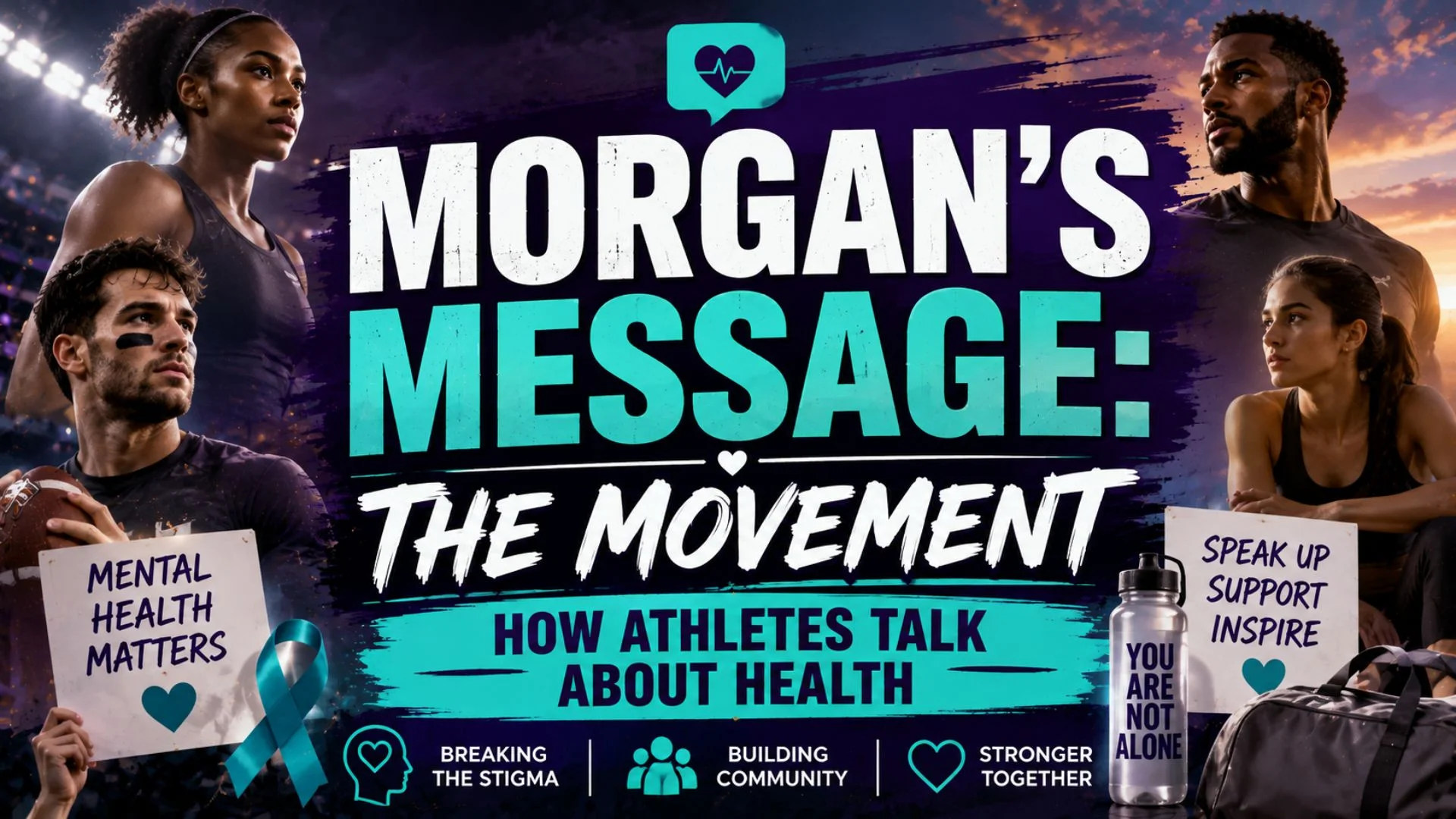
Morgan’s Message is a powerful movement dedicated to eliminating the stigma surrounding mental health within the student-athlete community. Founded in memory of Morgan Rodgers, a Duke University lacrosse player who tragically took her own life in July 2019 at the age of 22, the organization has grown into a nationwide phenomenon with over 6,053 ambassadors working across 1,856 high school and college campuses in six countries.
At its core, Morgan’s Message advocates that mental and physical health deserve equal attention in athletics. The organization empowers student-athletes to speak up, support one another, and normalize conversations around mental health. Through peer-to-peer conversations, dedication games, and campus chapters, Morgan’s Message is transforming how athletes think about and address their mental wellbeing.
What Is Morgan’s Message and Why Does It Matter?
Morgan’s Message is a 501(c)(3) nonprofit organization created on July 11, 2020, exactly one year after Morgan Rodgers’s death by suicide. The organization was founded by Morgan’s family and close friends, who wanted to turn their devastating pain into purpose. The mission is to eliminate the stigma surrounding mental health within the student-athlete community and equalize the treatment of physical and mental health in athletics.
The organization aims to amplify stories, resources, and expertise to strengthen student-athlete mental health, build community through peer-to-peer conversations, and provide a platform for advocacy. As Clare Kehoe Zychowski, Morgan’s childhood friend and teammate who co-founded the organization, put it: “If there is someone struggling in silence, they might feel a little bit less alone, more likely to let someone in their life” .
The Origin Story: Morgan Rodgers
- Morgan Rodgers was a beloved sister, daughter, friend, and a highly accomplished Division I lacrosse player at Duke University. Long-time friend and teammate Clare Kehoe recalls her upbeat, infectious energy and days spent dancing along to music blasting in the locker room . Morgan was a fierce competitor on the field, a skilled artist, loyal friend, and loving sister.
- Morgan was a sophomore at Duke University when she tore her ACL, MCL and meniscus, which ended her second season on the women’s lacrosse team before her first game and threatened the rest of her athletic career. She committed to a year of knee surgeries and intense rehabilitation to return to her sport. At the same time, she silently suffered from depression and anxiety .
- Despite being a charismatic, vivacious, and driven young woman who excelled academically and athletically, Morgan kept her mental health struggles hidden from everyone, including her family and twin sister. Her mother, Dona Rodgers, said Morgan “was very convinced that no one would ever understand, and that she could handle this. And that was wrong” . Morgan took her own life in July 2019, leaving her loved ones shattered and asking, “How come no one knew?” .
The Core Mission of Morgan’s Message
- The organization’s core mission is to eliminate the stigma surrounding mental health within the student-athlete community by advocating that mental and physical health deserve equal attention. The main message is simple but profound: “You are not alone” .
- The organization aims to expand the dialogue on mental health by normalizing conversations, empowering those who suffer in silence, and supporting those who feel alone. The goal is to create an environment within schools and athletic programs where everyone feels comfortable speaking freely about their emotions and stresses.
- Kyra Harney, a former teammate of Rodgers’ at Duke and director of the organization’s at-large education program, explains: “What the whole nonprofit is organized around is just spreading awareness for mental health, specifically in the student athlete community. I think a lot of times we tie in our identity to just who we are as an athlete and the whole message is that you’re more than just an athlete” .
How Morgan’s Message Works
- Morgan’s Message operates primarily through a peer-to-peer student-athlete ambassador program. Student-athletes apply to become ambassadors at their high schools or colleges, leading chapters that organize meetings, events, and awareness campaigns .
- The development of the program relies heavily on feedback from students to figure out how Morgan’s Message can best support them. This approach ensures the organization remains relevant and effective in addressing the actual needs of student-athletes.
- In a video featured on the Morgan’s Message website, Dona and Kurt Rodgers say their daughter was an energetic person her friends and family could lean on. She didn’t tell anybody about her own mental health struggles. Her mother says Rodgers was never diagnosed with depression, and they did not realize she was struggling until it was too late.
- Anna Callahan, who was a freshman on the lacrosse team at the time, started a group at Duke the week of Rodgers’ death for student-athletes who knew Rodgers or were struggling themselves, so they could connect with one another without judgment .
The Ambassador Program
- The ambassador program is the backbone of Morgan’s Message. Student-athletes volunteer to serve as ambassadors, leading chapters at their schools. They organize discussions, presentations, fundraisers, and dedication games to connect with other athletes .
- Ambassadors learn about athlete mental health through meetings, research, and liaisons who work for Morgan’s Message. Their job is to normalize and destigmatize conversations around mental health and amplify the resources provided by the organization .
- As of 2026, the organization had over 6,053 ambassadors working across 1,856 campuses in six countries. Morgan’s Message launched the At-Large Ambassador Program on May 1, 2023, as a way for individuals who are not currently student-athletes to bring Morgan’s Message to their community.
- All Ambassadors receive onboarding training to learn best practices for starting and leading a Morgan’s Message chapter. They are invited to bi-monthly Zoom meetings featuring expert guest speakers and Morgan’s Message staff. All onboarded ambassadors receive access to the resource portal via TadHealth .
Dedication Games: A Key Strategy
- One of the most visible strategies of Morgan’s Message is the dedication game. Schools organize a Morgan’s Message dedication game for each varsity sport, where teams play for something bigger than the score .
- During these games, teams set up booths with Morgan’s Message wristbands, ribbons, and educational materials explaining Morgan’s story and what Morgan’s Message aims to accomplish . At the game’s onset, captains read out a message to the crowd, bringing light to Morgan’s journey and the significance of mental health in athletics. This is followed by a 9-second moment of silence in remembrance of Morgan’s jersey number .
- The lively atmosphere of these games resonates with athletes because “everyone is playing for something bigger than themselves or the score at the end” . The teal ribbon is chosen due to Morgan’s love of the color .
The Peer-to-Peer Model
- The peer-to-peer model is central to Morgan’s Message’s success. Starting with an informal group at Duke the week of Morgan’s death, student-athletes connected with one another without judgment. This model has remained true to its roots, focusing on student-athletes talking honestly about what they’re going through .
- The organization’s programming structure guides students through the resources in chronological order, with the opportunity for students to select mental health sub-topics that are most relevant to their community after sharing foundational content . Resources include mini-presentations, discussion questions, and activities.
Why Student-Athletes Need Morgan’s Message
- Student-athletes face unique pressures that can take a toll on mental health. Fear of failure is a main concern, and student-athletes may feel like they’re failing if they don’t meet demands. The pressure to win, be perfect, or make it to the next level can serve as a barrier to seeking needed care and treatment.
- Student-athletes may place so much of their self-worth in their ability as an athlete, making injuries or performance issues devastating. The ethos of athletics, which extols toughness and single-minded focus, can be a hurdle, as athletes learn their whole lives to “tough it out.” Morgan’s Message addresses these challenges head-on.
- At Arizona State University, chapter chair Keeley Cleland leads monthly meetings that are open to all ASU students but primarily serve student-athletes. Around 20 typically attend, many of them lacrosse players, swimmers, and triathletes. The conversations are meaningful. They talk about coming back from injuries, exam anxiety, navigating expectations, and also about stress management .
The Impact on Mental Health in Athletics
- Morgan’s Message has significantly impacted how the athletic community addresses mental health.
- By normalizing conversations and providing peer support, the organization has created a community where athletes can feel less alone.
- Dona Rodgers, Morgan’s mother, has spoken with people who say they wouldn’t be here without the help of Morgan’s Message . “It’s scary to think that you could be responsible for helping someone that was in a deep dark place,” Rodgers said. “But it also feels really good, and it feels like we’re doing something that matters” .
How to Get Involved with Morgan’s Message
- Student-athletes can apply to become ambassadors at their high school or college. Schools can start a Morgan’s Message chapter with support from the organization. Anyone can support the cause by participating in dedication games, wearing Morgan’s Message merchandise, or donating to the nonprofit.
- As of 2026, the organization had 1,856 campuses with chapters, and they continue to grow. Students can follow @morgansmessage on Instagram for updates and information .
FAQs
What is Morgan’s Message?
Morgan’s Message is a nonprofit organization founded in memory of Duke lacrosse player Morgan Rodgers. It works to eliminate the stigma surrounding mental health in student-athletes by advocating equal treatment of physical and mental health .
Who was Morgan Rodgers?
Morgan Rodgers was a Duke University lacrosse player who died by suicide in July 2019 at age 22. She had been struggling with depression and anxiety, which she kept hidden from everyone, even while undergoing intensive knee rehabilitation .
How did Morgan’s Message start?
Morgan’s family and close friends established Morgan’s Message on July 11, 2020, exactly one year after Morgan’s death.
They wanted to turn their devastating pain into purpose .
What does the ambassador program involve?
Student-athletes volunteer to become ambassadors at their schools, leading chapters that organize meetings, discussions, and dedication games. They receive training and resources from the organization .
What is a dedication game?
A dedication game is a sports event where teams play in honor of Morgan’s Message. They set up educational booths, have captains read a message about mental health, and observe a 9-second moment of silence .
What is the 9-second moment of silence?
The 9-second moment of silence during dedication games represents Morgan Rodgers’s jersey number, honoring her memory and bringing attention to the cause .
How many campuses have Morgan’s Message chapters?
As of 2026, Morgan’s Message has chapters on 1,856 high school and college campuses across six countries, with over 6,053 ambassadors .
Conclusion
Morgan’s Message has become a powerful force for change in how student-athletes think about and address mental health. From a single tragic loss, an entire movement has emerged, reaching thousands of campuses and millions of athletes. By empowering student-athletes to speak up, support one another, and normalize conversations around mental health, Morgan’s Message is truly saving lives. The message is clear: “You are not alone. There is nothing wrong with you. Recovery is possible.”

Ethan Brooks is a content writer specializing in messages, wishes and modern communication trends. He creates simple, engaging, and relatable content that helps people express their thoughts and emotions in the best way possible.